








Plan a Coin Collection Budget: Reliable and Long-Term Oriented
Coin collecting remains one of the most affordable hobbies, even if it doesn’t seem that way on the first glance. The key is smart budget planning for such an activity. When you avoid impulsive purchases, stick to a certain strategy, and build goals, it all becomes much easier than in a chaotic beginner flow. With such an approach, you can even obtain coins worth money without extra effort and grow your collection’s value from year to year.

Start With a Clear Look at Your Finances
The first step is understanding how much you can safely allocate to the hobby. A practical guideline is 1–5% of monthly disposable income, depending on your experience level and household commitments. Many beginners start with $50–200 per month, enough to build thematic sets or begin exploring early U.S. series without overspending.
A structured approach might look like this:
- Cover essentials (rent, food, savings) first.
- Identify remaining discretionary income.
- Allocate a fixed portion for collecting.
- Protect a 20% buffer for grading fees or unexpected opportunities.
A consistent budget leads to real progress. For example, a collector contributing $200 per month can complete a $5,500 type set in under three years without strain.
Why a Budget Matters in Long-Term Collecting
Coins fluctuate in price due to market swings, metal values, and collector demand. A budget helps smooth these shifts. You spread purchases across multiple months, reducing the impact of seasonal pricing spikes or sudden auction trends. You also avoid the common pitfall of buying high-premium coins too early due to fear of missing out.
Tracking tools such as spreadsheets or digital finance planners combined with a coin scanner make budgeting easier. Useful information to log includes:
- Purchase price
- Seller or auction platform
- Grade and certification details
- Shipping or submission fees
- Notes for future upgrades
Well-documented records support accurate valuations later—especially if you plan to sell, trade, or pass down your collection.
Integrating Research Into Your Budget Planning
Price guides like the Red Book, Greysheet, and online auction archives help set expectations. They reveal which series fit your spending level and how long specific goals may take. With this research, your budget becomes more than a number—it becomes a roadmap for daily practice and long-term growth.
Select a Theme That Matches Your Budget Level
Once your budget is set, the next step is defining what kind of collection you want to build. Focus prevents overspending, reduces frustration, and strengthens long-term appreciation. Collectors who chase “everything that looks interesting” often run out of funds quickly and end up with scattered, low-value material. A focused theme solves that problem by bringing structure and clarity to every purchase.
A well-chosen theme keeps your expenses predictable. Try starting with something like these:
- U.S. Lincoln cents for beginners
- State and National Park quarters for affordable variety
- World silver coins under $20 for international exploration
- Mercury dime type sets for intermediate budgets
- Certified Morgan dollars for advanced collectors
Your goal is to choose a series with enough depth to stay interesting but not so broad that it becomes overwhelming. Research mintage charts on Greysheet or CoinWeek, or log interesting collectibles into a coin value app to identify key dates and understand which coins fit your monthly allowance.
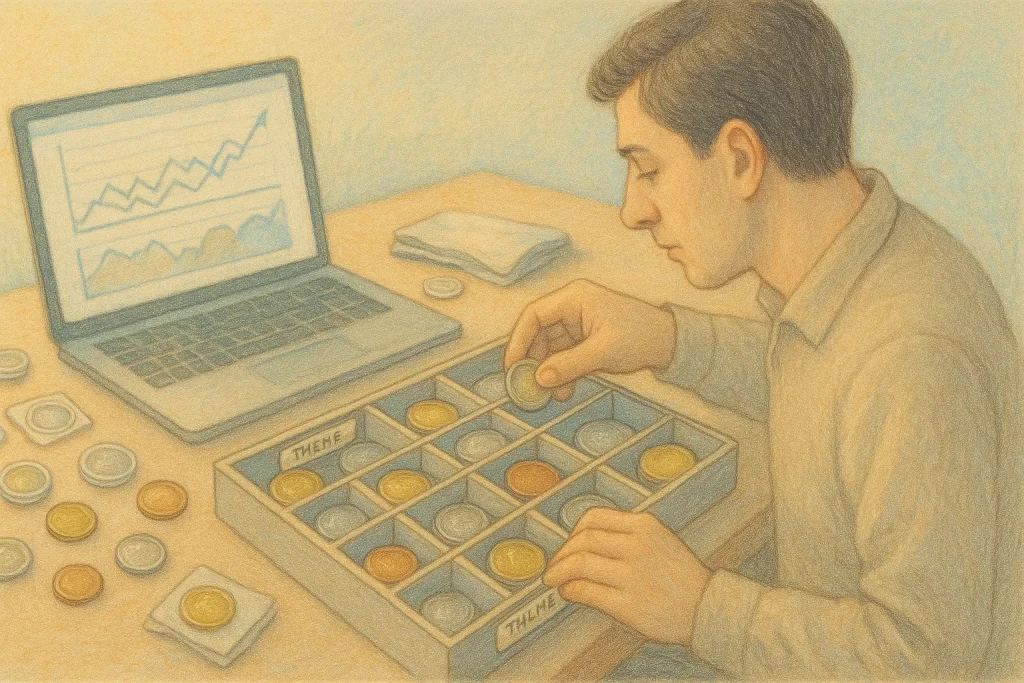
Use a Tiered Spending Strategy
Most collectors benefit from dividing monthly funds into categories:
- 70% for planned purchases such as filling set gaps
- 20% for opportunistic buys at shows or auctions
- 10% reserved for upgrades or grading fees
This structure keeps spending under control while still allowing room for unexpected finds.
Budget Levels and Practical Focus Options
| Budget Level | Monthly Spend | Sample Focus |
| Beginner | $50–100 | Circulated wheat pennies, world silver bulk lots |
| Intermediate | $100–300 | Mercury dimes, early Jefferson nickels, small type sets |
| Advanced | $300+ | Graded Morgan dollars, low-mintage commemoratives |
Starting with lower-grade examples (VF-20 and above) helps beginners stretch their funds. Over time, you can upgrade pieces as your collection grows in both value and direction.
Executing Purchases With Strategy
Buying smart is part of budget control. Proven tactics include:
- Shopping at coin shows and reputable dealers with return policies
- Buying key dates certified, while acquiring common dates raw
- Using auction “lots” for better per-coin pricing
- Networking with collectors for trades instead of cash purchases
Digital tools enhance this process. The Coin ID Scanner app helps verify mint years, composition, weight, and price ranges through photo identification (camera or gallery upload). With data from over 187,000 coins, it reduces the risk of overpaying and helps keep your budget aligned with market reality.
A well-planned coin budget only works if you track your progress and refine it over time. Markets shift, new opportunities appear, and collecting interests evolve. Long-term budgeting combines structure with flexibility, helping you stay disciplined while still taking advantage of meaningful finds.
Maintain Accurate Records of Every Purchase
Good documentation is one of the strongest habits a collector can build. Updated records support smarter decisions and prevent duplicate spending. Key elements to track include:
- Purchase price and date
- Seller or auction source
- Grade or certification number
- Notes on condition or upgrade potential
- Estimated market value
- Storage location within your collection
Reviewing these records quarterly reveals which parts of your collection are thriving and which areas may need adjustment.
Rebalance Your Collection as Markets Change
Just like financial portfolios, coin collections benefit from regular rebalancing. A few helpful rules:
- Sell underperforming pieces and reinvest the proceeds.
- Upgrade important series one coin at a time.
- Shift focus when mintage discoveries, new error reports, or market trends change the landscape.
- Reassess bullion exposure, as metal prices can influence your overall allocation.
Strong collections grow through intentional refinement, not sheer accumulation.
Track Values and Conditions With Digital Tools
Modern collectors rely on digital tools for accuracy and convenience. The Coin ID Scanner app supports long-term planning with:
- Photo-based identification for mint year, composition, and weight
- Market price ranges for smarter buying decisions
- AI Coin Helper (premium) for deeper insights
- Smart filters for targeted searches
- Digital inventory management to group, label, and track coins over time
These features allow collectors to review their whole portfolio at a glance, compare values, and stay aligned with budget goals.
Think in Years, Not Weeks
Long-term budgeting embraces patience. Quality coins often appreciate slowly, especially those with lower mintages, strong demand, or premium grades. A stable budget protects you from overspending while giving you the freedom to build a collection with depth, cohesion, and lasting value.
When you combine discipline, research, and consistent tracking, your budget becomes more than a limit—it becomes a strategic tool that guides your entire collecting journey.
- Plan a Coin Collection Budget: Reliable and Long-Term OrientedCoin collecting remains one of the most affordable hobbies, even if it doesn’t seem that way on the first glance. The key is smart budget
- How to Detect a Valuable Penny in Your Collection: Guide for Hobbyists
 At first glance, a penny may seem like the least exciting coin in your pocket — a humble piece of copper (or zinc) often overlooked
 - Organizing a Family Trip without Going Crazy: Top Life Hacks
 Planning a family trip should spark excitement, not migraines. But when you’re juggling different interests, dietary needs, nap schedules, finding out ‘does GPS work without
 - Go Vintage: Top Tips on Flea Markets Exploration
 Flea markets are more than just open-air bazaars—they’re living archives of style, craftsmanship, and stories waiting to be uncovered. Whether you’re searching for a mid-century
 - The Power of Accessories: Elevating Every Outfit
 In the world of fashion, accessories play a pivotal role in transforming an outfit from ordinary to extraordinary. They have the power to convey your
 - Offbeat Destinations: Discovering the World’s Hidden Gems
 Introduction In a world where popular tourist hotspots often dominate travel itineraries, there is a growing desire among adventurous souls to explore the lesser-known destinations